
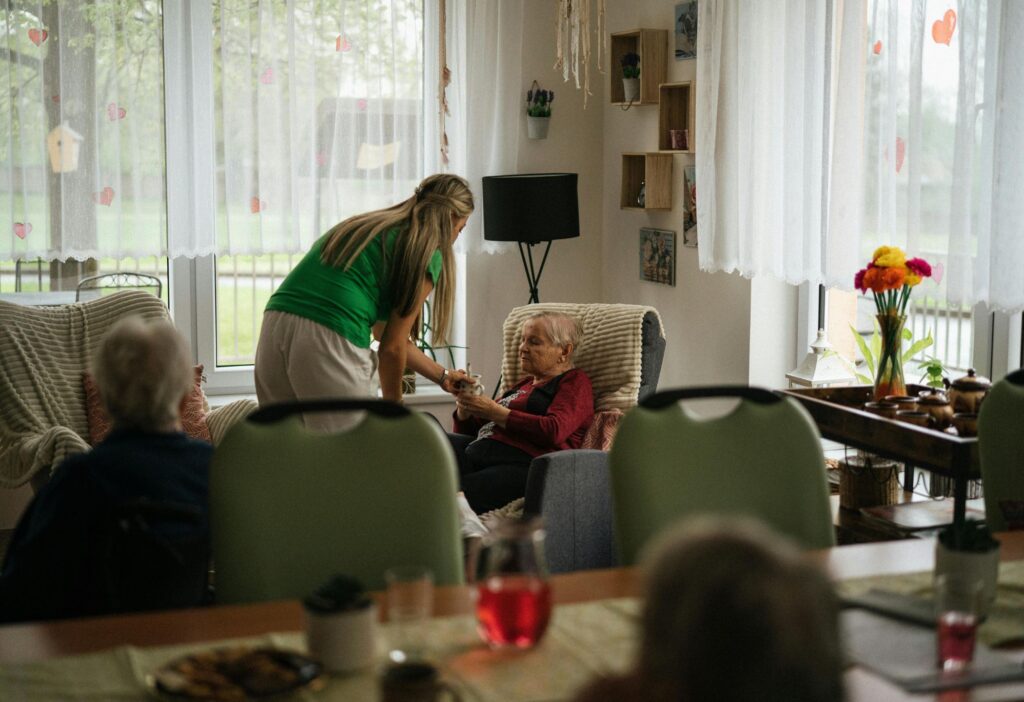

Most families hire a caregiver with only a rough idea of what the job actually involves, and that vague picture causes real problems later: a family assumes the caregiver will manage medications directly, or handle a wound dressing, or drive their parent’s own car, only to learn during an actual crisis that none of that is within scope. Understanding exactly what does a home caregiver actually do, and just as importantly what they don’t do, is the difference between a smooth, well-matched care arrangement and a frustrating one built on mismatched expectations.
This guide breaks down the real day-to-day work of a home caregiver, the specific tasks that are off-limits by law or training, the different types of caregivers and what separates them, and what a typical arrangement actually costs. It also covers how duties shift when dementia is part of the picture, how family caregiving differs from a paid arrangement, and how to tell whether a caregiver is actually doing the job well rather than just showing up.
Disclaimer: This article is for general informational purposes only and isn’t medical or legal advice. Caregiver scope of practice rules vary by state and by individual agency policy; confirm specifics directly with any agency or caregiver before hiring.
Key Takeaways
- A non-medical home caregiver’s work centers on personal care, household support, companionship, and transportation — not medical treatment.
- Caregivers can remind someone to take medication but generally cannot administer it themselves, including injections, eye drops, or medicated creams.
- Different caregiver titles — personal care aide, home health aide, CNA, home health nurse — reflect real differences in training and what they’re legally allowed to do.
- “Home care” and “home health care” are often used interchangeably but describe genuinely different services: one is non-medical support, the other is skilled clinical care.
- The national median cost for non-medical home care was around $35 per hour in 2025, though this varies significantly by region and by the specific tasks involved.
What Does a Home Caregiver Actually Do? The Short Answer
A non-medical home caregiver’s job falls into five broad categories: personal care (helping with bathing, dressing, and hygiene), household support (meals, light housekeeping, laundry), companionship (conversation, activities, emotional support), transportation (errands, appointments), and observation and reporting (noticing and communicating changes in health or behavior to family or medical providers). What a specific caregiver actually does day to day depends heavily on the individual care plan, the client’s needs, and the caregiver’s specific certification level, which is exactly why it’s worth understanding the categories in detail rather than assuming “caregiver” means one fixed job description.
Personal Care Tasks
This is usually the core of what people picture when they think of caregiving: help with bathing or showering safely, dressing, grooming (hair, shaving, oral care), toileting and continence care, and transferring, meaning helping someone move safely between a bed, chair, wheelchair, or bathroom. These tasks require training in proper body mechanics to avoid injuring either the caregiver or the client, and they’re usually the tasks that determine whether someone needs a caregiver in the first place, since difficulty with even one of these basic activities of daily living (ADLs) is often the trigger for seeking help.
Household and Daily Living Support
Beyond direct personal care, most caregiving arrangements include meal planning and preparation (often with attention to specific dietary restrictions), light housekeeping like washing dishes, doing laundry, and keeping living spaces tidy and safe, and grocery shopping or running errands. It’s worth noting this is typically “light” housekeeping specific to the client’s living space, not deep cleaning, yard work, or tasks unrelated to the client’s day-to-day needs, which usually fall outside a standard care plan unless specifically negotiated in advance.

Medication Reminders (and Why That’s Different from Medication Administration)
This is one of the most commonly misunderstood parts of a caregiver’s job. A non-medical caregiver can remind a client that it’s time to take medication, and can hand over a pre-sorted pill organizer that a nurse or pharmacist has already filled, but in most states they cannot dispense, draw up, measure, or administer medication themselves, including injections, eye drops, ear drops, or medicated creams. This distinction matters enormously for a family planning care: if your parent needs someone to physically administer insulin injections, for example, that’s a task for a home health aide working under a nurse’s supervision or a skilled nurse, not a standard personal care aide, regardless of how experienced or trustworthy that aide is.
Companionship and Emotional Support
Isolation is a real and significant risk for older adults living alone, and the companionship side of caregiving is not a minor add-on to the job, it’s often one of the most valuable parts of it. This includes genuine conversation, playing games or doing puzzles, accompanying a client on walks or to community activities, and simply being present in a way that reduces loneliness. Families sometimes undervalue this part of the role compared to physical tasks, but many caregivers and care recipients describe the relationship and companionship as the part that matters most to quality of life day to day.
Transportation and Appointments
Getting to medical appointments, the pharmacy, the grocery store, or social activities is a common caregiver responsibility, though it comes with an important caveat: unless a caregiver’s agency policy and insurance specifically permit it, they may not be authorized to transport a client in their own personal vehicle, or to drive the client’s car without that being explicitly built into the care plan and covered by the right insurance. This is a detail worth confirming directly before assuming transportation is automatically included.
Health Monitoring and Reporting
Even a non-medical caregiver plays an important role in noticing changes: a shift in appetite, new confusion, unusual fatigue, a skin change, or a fall risk that’s gotten worse. Their job here is to observe and report accurately to family and, when appropriate, to a physician or home health nurse, not to diagnose or decide on treatment changes themselves. Home health aides, who have more training than a standard personal care aide, may also check and record basic vital signs like blood pressure, pulse, and temperature as part of a structured care plan, though the actual clinical interpretation of those numbers remains with a licensed professional.
What a Home Caregiver Does NOT Do
Just as important as the list of things a caregiver handles is a clear list of what’s off-limits for a standard, non-medical caregiver, regardless of how skilled or experienced they are:
- Administering medication, including injections, eye or ear drops, and medicated creams — reminders and pre-sorted pill organizers are fine; physically giving the medication generally isn’t.
- Medical procedures such as wound care requiring sterile technique, managing IVs, adjusting oxygen levels, inserting catheters or feeding tubes, or suctioning.
- Diagnosing or making treatment decisions — a caregiver observes and reports; a licensed professional interprets and decides.
- Designing or modifying a therapy program — a caregiver can help with exercises a physical or occupational therapist has already prescribed, but can’t create or adjust the program itself.
- Handling finances or legal matters — managing bank accounts, paying bills, or acting as power of attorney falls outside a caregiver’s role entirely.
- Deep cleaning, yard work, or tasks unrelated to the client, such as childcare for other household members or extensive home repairs, unless specifically negotiated as part of the arrangement.
Any caregiver, agency or private, who’s willing to go beyond these boundaries without proper training and authorization should be treated as a red flag rather than a sign of extra dedication — it usually means a shortcut is being taken with your parent’s safety.
Types of Home Caregivers: PCA vs HHA vs CNA vs Home Health Nurse
The specific title matters, because it reflects real differences in training and legal scope of practice, according to a breakdown by CaringInfo, a program of the National Hospice and Palliative Care Organization.
| Caregiver Type | Typical Training | Scope |
|---|---|---|
| Personal Care Aide (PCA) | Minimal formal training, often just a high school diploma | Non-medical support: hygiene, meals, transportation, companionship |
| Home Health Aide (HHA) | CNA certification plus additional training | Personal care plus basic health monitoring, under nurse supervision |
| Certified Nursing Assistant (CNA) | 4–8 week state-approved training program | Personal care plus assistance with treatments as directed by a medical professional |
| Licensed Practical Nurse (LPN) | About 12 months of vocational training plus licensing exam | Medical care: vital signs, medication administration, wound dressing |
| Registered Nurse (RN) | Associate or bachelor’s degree in nursing | Full clinical care, including IV medications and care plan oversight |
Most families hiring a caregiver for daily personal care and companionship, without a specific ongoing medical need, are looking for a PCA or HHA. A specific medical need — wound care, injections, complex medication management — requires stepping up to a CNA, LPN, or RN, usually delivered through a home health agency rather than a standard home care agency.
Home Care vs Home Health Care: Why the Terms Get Confused
These two terms sound nearly identical but describe genuinely different services, and mixing them up is one of the most common points of confusion for families starting this search. According to CareScout, non-medical home care covers help with daily living activities like bathing, dressing, meal preparation, and companionship, and is generally paid for privately, through long-term care insurance, or in some cases Medicaid waiver programs. Home health care, by contrast, involves skilled clinical services like wound care, injections, physical or speech therapy, and monitoring of specific health conditions, delivered by licensed clinicians, and can sometimes be covered by Medicare or private insurance for a limited, medically necessary period, typically tied to a specific diagnosis or recovery from a hospital stay.
If your parent needs help getting dressed and someone to prepare meals, you’re looking for home care. If they need a nurse to manage a wound or administer injections after a hospital discharge, you’re looking for home health care, and often for a shorter, more clinically defined period rather than ongoing daily support.
A Typical Day with a Home Caregiver
A representative day for a client receiving a few hours of daily caregiver support might look like this: the caregiver arrives in the morning and helps with bathing, dressing, and grooming, prepares and serves breakfast, reminds the client about morning medication, handles light housekeeping like washing breakfast dishes and starting a load of laundry, accompanies the client to a mid-morning doctor’s appointment or run errands, prepares lunch, and spends the afternoon on conversation, a walk, or a shared activity before wrapping up the visit with an update to family about how the day went. A live-in or 24-hour arrangement follows a similar structure across a longer day, with overnight supervision and safety checks added in.
How Many Hours Do Caregivers Typically Work?
Arrangements range widely based on need. Some families use a caregiver for just a few hours a few days a week, mainly for companionship and light help. Others need daily visits of several hours for more involved personal care. Live-in caregivers stay in the home and are typically on-call for a set number of hours with scheduled breaks and sleep time built in, which usually costs less per hour than round-the-clock shift coverage but comes with its own tradeoffs around privacy and caregiver rest. Full 24-hour care, staffed by rotating shifts of caregivers rather than one live-in person, is the most expensive and intensive option, generally reserved for clients who need supervision or assistance at any hour of the day or night. There’s no single right number of hours — the goal is matching coverage to actual need, and it’s reasonable to start smaller and add hours gradually as needs become clearer, rather than committing to more coverage than is currently necessary.
What It Costs
According to Bureau of Labor Statistics data, the median pay for home health and personal care aides was $17.21 per hour, or $35,800 annually, in 2025, and the field is projected to grow 18% from 2025 to 2035, much faster than the average occupation, with roughly 760,500 job openings expected annually as demand for in-home care continues rising. What a family actually pays per hour is typically higher than that wage figure once an agency’s overhead, training, insurance, and scheduling costs are factored in, with the national median for non-medical home care running around $35 per hour as of 2025.
Live-in arrangements and 24-hour shift coverage are typically billed differently, often as a daily or weekly rate rather than a straightforward hourly rate, and it’s worth getting a clear written breakdown of exactly how billing works before committing to either arrangement. It’s also worth asking whether the quoted rate already reflects any overtime rules for extended shifts, since some states require overtime pay for live-in caregivers working beyond a certain number of hours, which can affect the final cost in ways that aren’t obvious from an initial hourly quote alone.
Helpful Products That Support a Caregiver’s Work
This section contains general product suggestions that can make a caregiver’s day-to-day work easier and safer, not a replacement for professional care. Some links may be affiliate links, meaning this site may earn a small commission at no extra cost to you if a purchase is made.
- Weekly pill organizer with AM/PM compartments — supports safe medication reminders without the caregiver needing to handle dosing decisions: search on Amazon
- Shower chair with back support — makes bathing assistance safer for both the caregiver and the client: search on Amazon
- Gait belt for safe transfers — a basic tool that reduces injury risk when helping someone move between bed, chair, and bathroom: search on Amazon
- Blood pressure monitor — useful for a home health aide tracking basic vitals as part of a documented care plan: search on Amazon
- Caregiver daily log notebook — a simple way to track meals, medication reminders, mood, and observations to share with family: search on Amazon
[TODO: Replace these generic Amazon search links with your real Amazon Associates affiliate links once approved]
Dementia and Caregiving: How Duties Shift
When dementia is involved, a caregiver’s day-to-day work expands beyond the standard task list, even without any change in medical certification level. Redirection becomes a routine skill: gently steering a client away from agitation or a repeated question rather than correcting or arguing. Safety monitoring becomes more active, since wandering, leaving the stove on, or misplacing important items are common risks that require a more watchful presence than caregiving for someone without cognitive impairment. Communication style also shifts, often toward shorter sentences, more patience with repetition, and techniques for managing behavioral changes without escalating a difficult moment.
None of this requires a higher medical certification by itself, but it does require specific dementia-care training that not every caregiver has received, which is worth asking about directly rather than assuming general caregiving experience automatically includes it.
Family Caregivers vs Paid Caregivers: What Changes
An unpaid family member providing care operates under a different, looser set of boundaries than a paid caregiver, for better and for worse. A daughter caring for her mother will often handle finances, make medical decisions, administer medication, and blur every line a paid caregiver’s job description would keep separate, simply because there’s no employer, agency, or licensing body drawing those lines. This flexibility is often necessary and appropriate within a family, but it’s also part of why family caregiving is so exhausting: there’s no defined scope to say “that’s not my job,” and no shift change to hand things off to.
Bringing in a paid caregiver alongside family care, even for a few hours a week, works best when the family is clear about which specific tasks the paid caregiver is taking over, rather than expecting them to seamlessly absorb the same undefined, all-encompassing role a family member has been filling. Writing down that division of labor, even informally, tends to reduce friction later, both between family members and between family and the paid caregiver.
How Caregiver Duties Are Documented
A well-run caregiving arrangement, whether through an agency or privately hired, usually includes a written care plan specifying exactly which tasks are included, how often, and any medical or behavioral details the caregiver needs to know. Many agencies also require a daily or per-visit log noting what was done, any observations about mood or health changes, and confirmation that scheduled tasks like medication reminders were completed. This documentation matters for more than just accountability: it’s often the first thing a physician or family member reviews when trying to understand a gradual change in a parent’s condition, since a caregiver’s day-to-day notes can reveal a pattern that’s hard to see from occasional family visits alone.
When One Caregiver Isn’t Enough: Adding a Second Layer of Support
Sometimes a single caregiver’s scope, even at the HHA or CNA level, isn’t enough to cover everything a parent needs, and families end up layering services rather than expecting one caregiver to do it all. A common combination is a personal care aide for daily hygiene and companionship, paired with a periodic visit from a home health nurse for medication management or wound care, or a family member handling finances and medical appointments while a paid caregiver covers daily personal care. Recognizing that “caregiver” doesn’t have to mean one person handling every single need is often the key to building a sustainable long-term arrangement rather than repeatedly searching for one impossible-to-find caregiver who can do everything.
How to Tell If a Caregiver Is Doing Their Job Well
- Your parent’s basic needs are consistently met — clean, fed, medication reminders happening on schedule, and personal hygiene maintained.
- Communication is clear and proactive, not just reactive when you ask directly what happened during a visit.
- Documentation is being kept, even informally, so you can track patterns over time rather than relying on memory.
- Your parent seems comfortable and, ideally, genuinely enjoys the caregiver’s company, not just tolerates their presence.
- The caregiver respects the boundaries of their role, flagging concerns that go beyond their scope rather than quietly taking on tasks they’re not trained or authorized for.
- Small problems get reported before they become big ones — a caregiver who mentions a minor skin irritation early is doing exactly what the observation-and-reporting part of the job is for.
Questions to Ask About What’s Included Before You Hire
- Exactly which personal care tasks are included in the standard rate, and which cost extra?
- Can this caregiver remind my parent about medication, or do we need someone with medication administration training?
- Is transportation in the caregiver’s own vehicle included, and is it covered by insurance?
- What’s the caregiver’s specific certification level (PCA, HHA, CNA), and does it match what my parent actually needs?
- How does the caregiver document and communicate changes in my parent’s condition back to our family?
- What happens if my parent’s needs increase beyond this caregiver’s scope — is there a clear process for stepping up to more skilled care?
Verifying a Caregiver’s Actual Training and Certification
Because the title on a business card doesn’t always match the training someone actually received, it’s worth verifying credentials directly rather than taking a resume at face value. For a CNA, ask for their state certification number and check it against your state’s nurse aide registry, which most states maintain online specifically so employers and families can confirm this. For an HHA, ask which agency or program provided their additional training beyond CNA certification, and how recently they completed it, since scope-of-practice rules and best practices do change over time. For a PCA, formal certification is less standardized, so references and a trial period carry relatively more weight in your evaluation than a credential check would.
This verification step matters most exactly when a family is tempted to skip it: when a caregiver comes highly recommended by someone you trust, or when you’re under time pressure to fill a gap quickly. A rushed hire is precisely when an unverified claim about training is most likely to go unchecked until it matters, so build the verification step into your process every time, regardless of how strong the referral or how urgent the need feels in the moment.
The Bottom Line
What does a home caregiver actually do comes down to five core areas: personal care, household support, companionship, transportation, and careful observation and reporting — all built around helping someone stay safe and comfortable at home, not around delivering medical treatment. Knowing exactly where that line falls, and matching your parent’s actual needs to the right caregiver type, prevents the mismatched expectations that cause so much frustration for families later. Whether you’re hiring your first caregiver or reassessing an arrangement that no longer fits, keep coming back to the same basic questions: what does this specific task require, and does the person doing it have the training and authorization to do it safely. When in doubt about whether a specific task is within a caregiver’s scope, ask directly and get the answer in writing before day one.
Frequently Asked Questions
What does a home caregiver actually do on a daily basis?
A home caregiver typically helps with personal care like bathing and dressing, prepares meals, handles light housekeeping, reminds clients about medication, provides companionship, and assists with transportation to appointments and errands. The exact mix depends on the individual care plan and the caregiver’s training level.
Can a home caregiver give medication?
In most states, a non-medical caregiver can remind a client to take medication and hand over a pre-sorted pill organizer, but cannot dispense, draw up, measure, or administer medication themselves, including injections, eye drops, or medicated creams. Medication administration typically requires a home health aide or nurse.
What’s the difference between home care and home health care?
Home care refers to non-medical support with daily living activities like bathing, meals, and companionship. Home health care refers to skilled clinical services like wound care, injections, and therapy, delivered by licensed medical professionals, often for a limited period tied to a specific diagnosis or recovery.
What’s the difference between a personal care aide and a home health aide?
A personal care aide (PCA) provides non-medical support with minimal formal training. A home health aide (HHA) has completed CNA certification plus additional training, allowing them to provide personal care plus basic health monitoring under a nurse’s supervision.
How much does a home caregiver cost?
The national median cost for non-medical home care was around $35 per hour as of 2025, though rates vary by region, the caregiver’s certification level, and whether the arrangement is hourly, live-in, or full 24-hour coverage.
Can a caregiver drive my parent’s car or their own car for errands?
It depends on the agency’s policy and insurance coverage. Unless transportation is explicitly included and covered by the right insurance, a caregiver may not be authorized to drive a client’s car or use their own vehicle for the client’s errands and appointments.
What should I do if my parent’s needs go beyond what our current caregiver can provide?
Talk to the agency or caregiver about stepping up to a higher level of care, such as a home health aide, CNA, or licensed nurse, depending on the specific new need. Many agencies can transition a client to a more skilled caregiver without switching providers entirely.
Does a caregiver handle household tasks beyond the client’s own space?
Generally no. Standard caregiving includes light housekeeping specific to the client’s living space, not deep cleaning, yard work, or tasks unrelated to the client, such as childcare for other household members, unless specifically negotiated as part of the care plan.