
There’s a particular kind of relief in watching your parent’s face light up over a question they can actually answer. Not every visit goes that way, and that’s exactly why trivia for seniors with dementia with answers is worth having in your back pocket — it gives you something reliable to reach for on the harder days.
This isn’t about testing anyone. It’s about finding an easy way in, especially when conversation on its own has started to feel harder for both of you. The questions below are grouped by topic and by dementia stage, so you can pick what fits the moment instead of guessing.
Before you start: Dementia looks different in every person. What works for one senior may not land the same way for another. Use these activities to connect, not to assess or diagnose — and check with your parent’s doctor or a memory care specialist about what fits their particular stage.
Key Takeaways
- Reminiscence-based questions reach long-term memories that often stay intact longer than recent ones.
- Matching the difficulty to your parent’s stage — open conversation, multiple choice, or simple yes/no — keeps the activity feeling successful.
- The goal is connection and comfort, not correct answers.
- A calm, distraction-free setting makes as much difference as the questions themselves.
- 50 ready-to-use questions are organized below by theme, so you can jump straight to what your parent enjoys most.
Why Trivia Works So Well for Someone With Dementia
Dementia doesn’t erase memory evenly. Long-term memories — the ones formed decades ago, often tied to emotion — tend to survive much longer than yesterday’s conversation. That’s why a question about a 1960s dance craze can land where “what did you have for lunch” falls flat.
The Alzheimer’s Association describes reminiscence as one of the more reliable ways to connect with someone living with dementia, precisely because it works with the memory that’s still there instead of asking for memory that isn’t.
There’s an emotional side to this too. Trivia gives you something to do together that isn’t caregiving in the clinical sense — no medication schedule, no appointment to manage. Just a shared moment, which matters for both of you.
Matching Trivia to Your Parent’s Stage
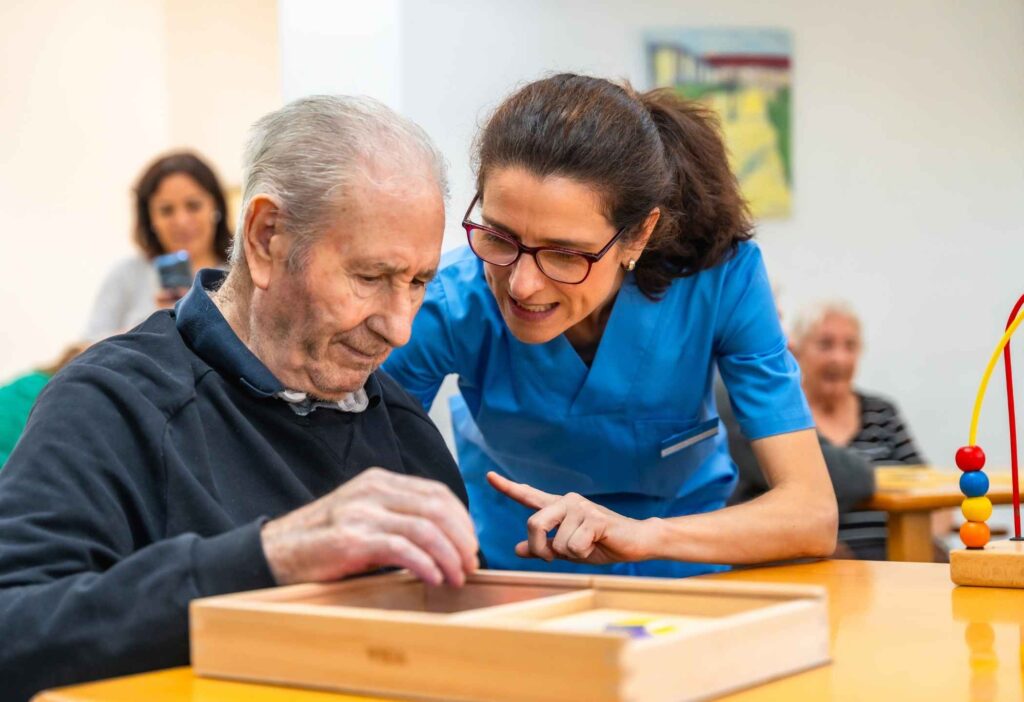
The same question can land completely differently depending on where your parent is in their journey. Adjusting for that isn’t extra work — it’s what makes the activity actually enjoyable instead of frustrating.
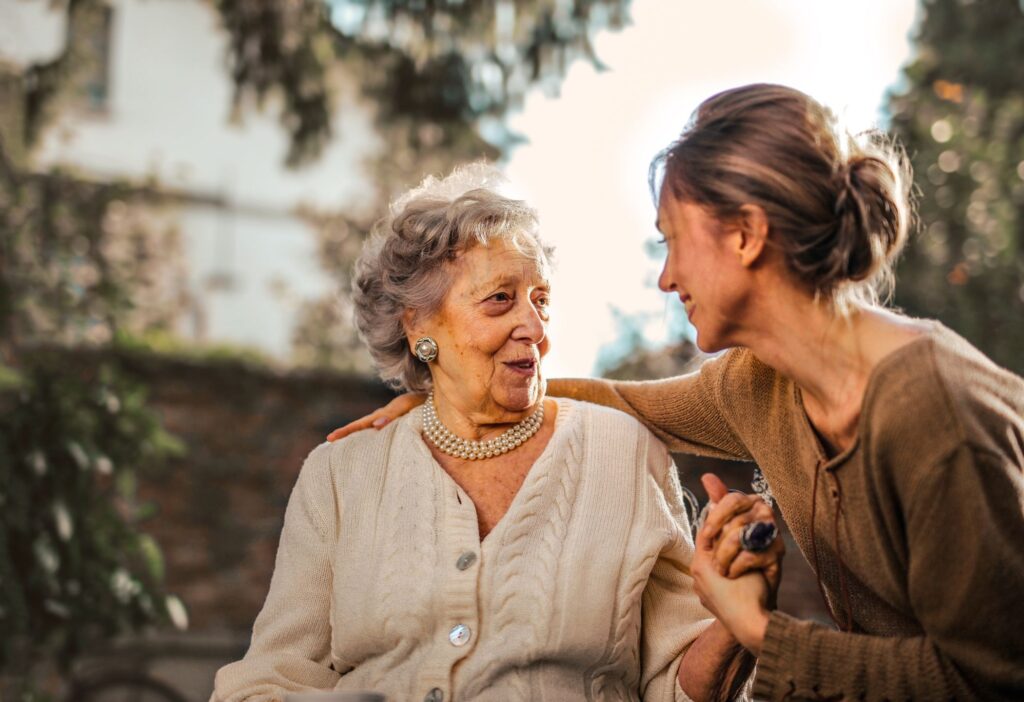
Early Stage: Let It Be a Conversation
If your parent still has strong verbal skills, open-ended questions work well. Ask about their favorite childhood vacation or their first job, and let them run with it. This is less “quiz” and more “storytelling prompt” — treat it that way.
Middle Stage: Offer Choices
Open-ended questions can start to feel like pressure as the condition progresses. Multiple choice takes that pressure off. Instead of “who sang this song,” try “was it Frank Sinatra or Elvis?” Two or three options is usually the sweet spot.
Late Stage: Simplify to Yes or No
At this point, accuracy stops being the point entirely. Show a photo of a rose and ask, “is this a rose?” The goal is a moment of recognition and comfort, not a correct answer. Sensory cues — music, scent, texture — often work better than words alone here.
Handling Frustration Without Derailing the Moment
Frustration during trivia doesn’t mean the activity failed — it means it’s time to adjust, not stop. Watch for fidgeting, sudden silence after being talkative, or a furrowed brow. These are your cues to shift gears before things escalate.
When an answer comes out wrong, resist the urge to correct it. Smile, validate the effort, and move on as if it were right. The point was never to test their knowledge — it was to spend a good few minutes together. If a topic clearly isn’t landing, switch to something lighter: music, old photos, or a short break with a snack.
50 Trivia Questions by Category
Here are 50 questions organized into five themes. Pull from whichever category matches your parent’s interests and the mood of the day — you don’t need to work through them in order.
1950s and 1960s Nostalgia (10 questions)
- What was the name of the first televised U.S. presidential debate, held in 1960?
- Do you remember the 1969 event when humans first walked on the moon?
- Which 1950s dance craze involved twisting your hips to the beat?
- What was the name of the famous 1967 music festival held in California?
- Which classic 1950s TV show featured a famous red-headed comedian?
- Who was known as the “King of Rock and Roll” in the 1950s?
- What was the 1960s fashion style known for its bright colors and bold patterns?
- Which legendary actress was known for her blonde hair and 1950s films?
- What was the name of the small, fuel-efficient car that symbolized the 1960s?
- Which British band made a splash in the U.S. during the 1964 “British Invasion”?
Answer Key
- The Kennedy-Nixon debate (John F. Kennedy vs. Richard Nixon)
- The Apollo 11 moon landing, with astronaut Neil Armstrong
- The Twist
- The Monterey Pop Festival
- I Love Lucy, starring Lucille Ball
- Elvis Presley
- Mod fashion
- Marilyn Monroe
- The Volkswagen Beetle
- The Beatles

Music and Songs (10 questions)
- Who was known as “The Chairman of the Board” and sang “Fly Me to the Moon”?
- Can you name the song that asks, “What a wonderful world” it is?
- Which crooner famously sang about “White Christmas”?
- What song features the lyrics “somewhere over the rainbow”?
- Who sang the classic hit “Unforgettable”?
- Can you finish the line: “You are my sunshine, my only…”?
- Which musical features the song “Do-Re-Mi”?
- Who sang “Love Me Tender”?
- What song encourages us to go “singin’ in the rain”?
- Which famous duo sang “Cheek to Cheek”?
Answer Key
- Frank Sinatra
- “What a Wonderful World,” made famous by Louis Armstrong
- Bing Crosby
- “Over the Rainbow,” sung by Judy Garland in The Wizard of Oz
- Nat King Cole
- “…my only sunshine” (from “You Are My Sunshine”)
- The Sound of Music
- Elvis Presley
- Singin’ in the Rain, starring Gene Kelly
- Fred Astaire and Ginger Rogers (from the film Top Hat)
Nature and Animals (10 questions)
- What’s the name of the bright yellow flower that often appears in early spring?
- Can you name a common garden bird with a bright red chest?
- Which flower is famous for its thorns and sweet scent?
- What do we call the small, colorful insects that flutter from flower to flower?
- Which tall, golden flower turns its head to follow the sun?
- What sound does a happy dog make when it greets you?
- Which animal is known for being independent and purring when content?
- What do we call the small, furry animal that stores nuts for winter?
- Which farm animal gives us wool for sweaters?
- Which large, wild animal is often associated with honey and the forest?
Answer Key
- Daffodil
- Robin
- Rose
- Butterflies
- Sunflower
- Barking
- Cat
- Squirrel
- Sheep
- Bear
Food and Cooking Memories (10 questions)
- What was the most common ingredient in your grandmother’s pantry?
- Can you name a classic kitchen appliance from the 1950s?
- What secret ingredient makes a perfect apple pie?
- Which flour was used most often for homemade bread?
- What was the name of the stovetop popcorn maker?
- What’s the main dish at most Thanksgiving dinners?
- Which vegetable is a common side dish at Christmas?
- What sweet treat is traditionally left for Santa on Christmas Eve?
- Can you name the classic gelatin salad served at holiday parties?
- What’s the main ingredient in pumpkin pie?
Answer Key
- Varies by family — flour and sugar are common answers, but let your parent’s own memory lead here.
- A percolator (stovetop coffee pot) or a manual toaster are classic 1950s answers.
- No single right answer — cinnamon, nutmeg, or a splash of lemon juice are popular guesses. This one’s really an invitation for their own recipe story.
- All-purpose or wheat flour
- A stovetop popcorn popper (often called a “Jiffy Pop” by brand)
- Turkey
- Varies by family — green bean casserole and Brussels sprouts are common answers.
- Cookies (traditionally with a glass of milk)
- Jell-O salad
- Pumpkin
Everyday Life and Local Geography (10 questions)
These last ten are intentionally personal — they’re about your own home, family, and town, so you’ll already know the answers. That’s the point: they let your parent show you they still know their own life, and let you gently fill in the gaps with warmth instead of correction.
- What do you use to brush your teeth in the morning?
- Which room in the house do we usually use to cook our meals?
- What object do you use to tell the time on the wall?
- What do you wear to keep your feet warm when walking outside?
- Which piece of furniture do you sit on to watch your favorite show?
- What’s the name of the main street that runs through our town?
- Can you name the park where we used to go for summer picnics?
- What’s the name of the grocery store where we usually buy milk?
- Which local landmark has the big clock tower downtown?
- What’s the name of the river or lake closest to our home?
Setting the Scene for Success
Where and when you do this matters almost as much as the questions themselves. A quiet room without a blaring TV, good lighting, and a time of day when your parent is naturally more alert — often mornings — all stack the odds in your favor.
| Environmental Factor | Recommended Action | Benefit |
|---|---|---|
| Background Noise | Turn off TV and radio | Improves focus |
| Lighting | Use bright, natural light | Reduces eye strain |
| Timing | Choose peak alertness (often mornings) | Increases participation |
| Seating | Use comfortable, familiar chairs | Promotes relaxation |
Physical props help too. Large-print picture card games built for dementia care — brands like Relish and Keeping Busy make dedicated sets — give you visual cues to lean on when words alone aren’t landing.
Making It Part of the Daily Routine
You don’t need to schedule a formal “trivia time.” These questions work just as well folded into things you’re already doing — a few during breakfast, one or two while helping with grooming, something calm and musical in the evening.
| Time of Day | Typical Task | Trivia Fit |
|---|---|---|
| Morning | Medication and breakfast | Simple historical facts |
| Afternoon | Hygiene and rest | Nature or music themes |
| Evening | Relaxation and bedtime | Gentle, calming memories |
Resources at Elder Care Haven
You don’t have to figure this out alone. Elder Care Haven offers a free Caregiver Checklist at eldercarehaven.com to help you organize routines like this one, plus a caregiver community where you can trade what’s actually worked for other families.
Conclusion
Trivia won’t slow the progression of dementia, and it isn’t meant to. What it can do is give you a reliable, low-stakes way to connect on the days that feel hardest — a few minutes where your parent gets to feel capable, and you get to feel close to them again.
Keep the goal simple: connection over correctness, patience over pace. Talk with your parent’s doctor or a memory care specialist about what best fits their stage, and let these 50 questions be a starting point, not a script.
About the Author: [Your Name], [your background — e.g. “family caregiver and dementia care researcher”], writes about aging, caregiving, and memory care at eldercarehaven.com.
FAQ
Why does trivia work so well for people with dementia?
Dementia tends to spare long-term, emotionally anchored memories longer than short-term recall. Trivia about decades-old music, events, or routines reaches those preserved memories, which is why it often succeeds where recent-memory questions don’t.
How do I adjust trivia questions for someone in the later stages of dementia?
Shift from open-ended questions to simple yes-or-no prompts and sensory cues — showing a photo and asking “is this a dog?” rather than “what animal is this?” The goal becomes recognition and comfort rather than a correct answer.
What should I do if my parent gets frustrated or gives a wrong answer?
Don’t correct them. Validate the effort, smile, and move on as if the answer were right. If frustration builds, switch to something calmer, like music or looking at photos together, rather than pushing through.
What time of day works best for trivia with a senior who has dementia?
Most seniors are more alert earlier in the day. Try folding a few questions into breakfast or a morning routine, and save calmer, music-based prompts for the evening when energy tends to be lower.
Are there tools or games designed specifically for dementia-friendly trivia?
Yes. Look for large-print card games with visual aids, such as those from Relish or Keeping Busy. These are built specifically for seniors with memory loss and work well alongside the verbal questions in this guide.
Can trivia and cognitive activities slow down dementia’s progression?
There’s no cure or proven way to reverse dementia, but engagement activities like trivia can support mood, reduce anxiety, and help maintain a sense of identity and confidence through successful recall.
Where can I find more caregiving resources for memory care?
Visit eldercarehaven.com for a free Caregiver Checklist and a community of caregivers navigating similar challenges.